One June 20, 2012, we visited
Jasper National Park. On our way we stopped at
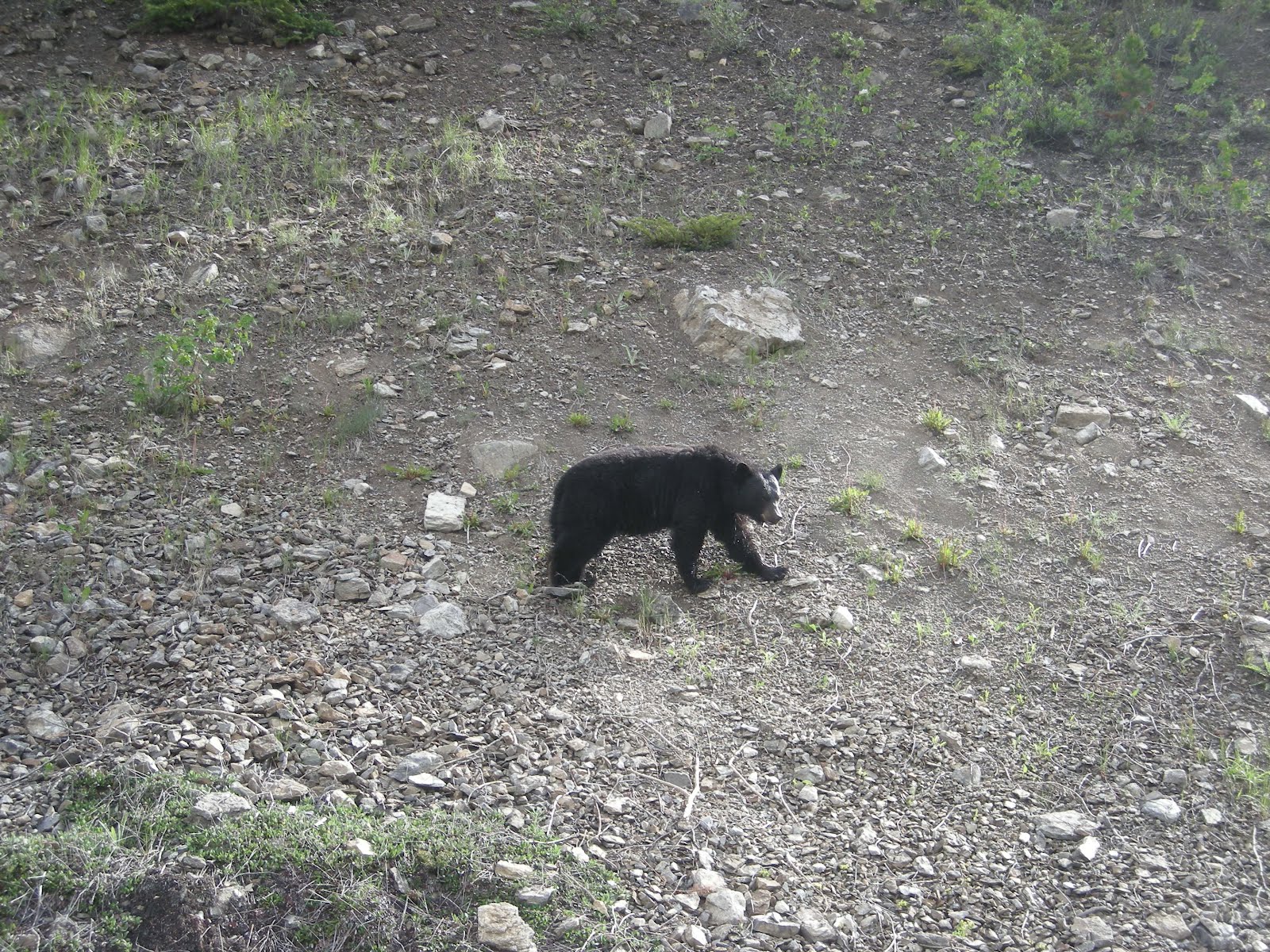
Lake Louise, and several other attractions. The views of the rockies and the wildlife were spectacular. We saw several
black bears,
elk and cariboo, mountain goats, and big horn sheep. We also viewed several falls and gorges in the park. Here are some pictures of our trip:


Jasper National Park is the largest of Canada's Rocky Mountain Parks and part of the UNESCO World Heritage Site. Jasper spans 11,228 square kilometres (4335 square miles) of broad valleys, rugged mountains, glaciers, forests, alpine meadows and wild rivers along the eastern slopes of the Rockies in western Alberta. There are more than 1200 kilometres (660 miles) of hiking trails (both overnight and day trips), and a number of spectacular mountain drives.


Jasper joins Banff National Park to the south via the Icefields Parkway. This parkway offers unparalleled beauty as you travel alongside a chain of massive icefields straddling the Continental Divide. The Columbia Icefield borders the parkway in the southern end of the park.


Large numbers of elk,
bighorn sheep, mule deer and other large animals, as well as their predators make Jasper National Park one of the great protected ecosystems remaining in the Rocky Mountains. This vast wilderness is one of the few remaining places in southern Canada that is home to a full range of carnivores, including
grizzly bears,
mountain lions,
wolves and
wolverines.


Park Highlights
In such a large and spectacular area, there are many sights to see and plenty of stories to be told. A few of the highlightes are listed here:
•The highest mountain in Alberta (Mt. Columbia, 3747 metres);
•The hydrographic apex of North America (the
Columbia Icefield) where water flows to three different oceans from one point;
•The longest underground drainage system known in Canada (the Maligne Valley karst);
•The only sand-dune ecosystem anywhere in the Four Mountain Parks (Jasper Lake dunes);
•The northern limit in Alberta of Douglas-fir trees (Brûlé Lake);
•The last fully protected range in the Rocky Mountains for caribou (Maligne herd);
•The most accessible glacier in North America (the Athabasca).


Did you know?
Jasper National Park protects over 10,800 square kilometres of the Rocky Mountain ecosystem which includes a diversity of wildlife, plants, rivers, lakes, glaciers, and magnificent mountains.
Jasper National Park offers over 1,200 kilometres of hiking trails, with scenery ranging from cascading waterfalls to alpine meadows carpeted in wildflowers.
Jasper National Park is one of four national parks (Jasper, Banff, Yoho and Kootenay) and three B.C. provincial parks (Mount Robson, Hamber and Mount Assiniboine) that make up the Rocky Mountain World Heritage Site.


On September 14, 1907, the Dominion Government established Jasper Forest Park (later called Jasper National Park), setting aside an area of about 13,000 square kilometres.
The National Parks Act was passed in 1930 and Jasper was officially established as a national park, with a final area of just over 10,000 square kilometres.
The Icefields Parkway, Highway 93, stretches for 230 kilometres (130 miles) between Jasper townsite and the town of Lake Louise, following the shadow of the Great Divide.
The Icefields Parkway crests two passes; Sunwapta Pass at 2035 metres and Bow Summit at 2069 metres. These passes take visitors to the very edge of the treeless, alpine tundra.
In the Canadian Rockies there are 69 naturally occurring species of mammals. It is very common to see elk, deer, bighorn sheep, coyote and black bear throughout Jasper National Park.
The largest glacial fed lake in the Canadian Rockies is found in Jasper National Park.
Maligne Lake is 22 kilometres long and 97 metres deep.
In 1916 Mount Edith Cavell was named to honor the heroic British nurse executed during World War 1 for assisting prisoners of war to escape German-occupied Belgium.


 Jasper National Park is the largest of Canada's Rocky Mountain Parks and part of the UNESCO World Heritage Site. Jasper spans 11,228 square kilometres (4335 square miles) of broad valleys, rugged mountains, glaciers, forests, alpine meadows and wild rivers along the eastern slopes of the Rockies in western Alberta. There are more than 1200 kilometres (660 miles) of hiking trails (both overnight and day trips), and a number of spectacular mountain drives.


 Jasper joins Banff National Park to the south via the Icefields Parkway. This parkway offers unparalleled beauty as you travel alongside a chain of massive icefields straddling the Continental Divide. The Columbia Icefield borders the parkway in the southern end of the park.


 Large numbers of elk, bighorn sheep, mule deer and other large animals, as well as their predators make Jasper National Park one of the great protected ecosystems remaining in the Rocky Mountains. This vast wilderness is one of the few remaining places in southern Canada that is home to a full range of carnivores, including grizzly bears, mountain lions, wolves and wolverines.


 Park Highlights
In such a large and spectacular area, there are many sights to see and plenty of stories to be told. A few of the highlightes are listed here:
•The highest mountain in Alberta (Mt. Columbia, 3747 metres);
•The hydrographic apex of North America (the Columbia Icefield) where water flows to three different oceans from one point;
•The longest underground drainage system known in Canada (the Maligne Valley karst);
•The only sand-dune ecosystem anywhere in the Four Mountain Parks (Jasper Lake dunes);
•The northern limit in Alberta of Douglas-fir trees (Brûlé Lake);
•The last fully protected range in the Rocky Mountains for caribou (Maligne herd);
•The most accessible glacier in North America (the Athabasca).
Park Highlights
In such a large and spectacular area, there are many sights to see and plenty of stories to be told. A few of the highlightes are listed here:
•The highest mountain in Alberta (Mt. Columbia, 3747 metres);
•The hydrographic apex of North America (the Columbia Icefield) where water flows to three different oceans from one point;
•The longest underground drainage system known in Canada (the Maligne Valley karst);
•The only sand-dune ecosystem anywhere in the Four Mountain Parks (Jasper Lake dunes);
•The northern limit in Alberta of Douglas-fir trees (Brûlé Lake);
•The last fully protected range in the Rocky Mountains for caribou (Maligne herd);
•The most accessible glacier in North America (the Athabasca).


 Did you know?
Jasper National Park protects over 10,800 square kilometres of the Rocky Mountain ecosystem which includes a diversity of wildlife, plants, rivers, lakes, glaciers, and magnificent mountains.
Jasper National Park offers over 1,200 kilometres of hiking trails, with scenery ranging from cascading waterfalls to alpine meadows carpeted in wildflowers.
Jasper National Park is one of four national parks (Jasper, Banff, Yoho and Kootenay) and three B.C. provincial parks (Mount Robson, Hamber and Mount Assiniboine) that make up the Rocky Mountain World Heritage Site.
Did you know?
Jasper National Park protects over 10,800 square kilometres of the Rocky Mountain ecosystem which includes a diversity of wildlife, plants, rivers, lakes, glaciers, and magnificent mountains.
Jasper National Park offers over 1,200 kilometres of hiking trails, with scenery ranging from cascading waterfalls to alpine meadows carpeted in wildflowers.
Jasper National Park is one of four national parks (Jasper, Banff, Yoho and Kootenay) and three B.C. provincial parks (Mount Robson, Hamber and Mount Assiniboine) that make up the Rocky Mountain World Heritage Site.


 On September 14, 1907, the Dominion Government established Jasper Forest Park (later called Jasper National Park), setting aside an area of about 13,000 square kilometres.
The National Parks Act was passed in 1930 and Jasper was officially established as a national park, with a final area of just over 10,000 square kilometres.
The Icefields Parkway, Highway 93, stretches for 230 kilometres (130 miles) between Jasper townsite and the town of Lake Louise, following the shadow of the Great Divide.
The Icefields Parkway crests two passes; Sunwapta Pass at 2035 metres and Bow Summit at 2069 metres. These passes take visitors to the very edge of the treeless, alpine tundra.
In the Canadian Rockies there are 69 naturally occurring species of mammals. It is very common to see elk, deer, bighorn sheep, coyote and black bear throughout Jasper National Park.
The largest glacial fed lake in the Canadian Rockies is found in Jasper National Park. Maligne Lake is 22 kilometres long and 97 metres deep.
In 1916 Mount Edith Cavell was named to honor the heroic British nurse executed during World War 1 for assisting prisoners of war to escape German-occupied Belgium.
On September 14, 1907, the Dominion Government established Jasper Forest Park (later called Jasper National Park), setting aside an area of about 13,000 square kilometres.
The National Parks Act was passed in 1930 and Jasper was officially established as a national park, with a final area of just over 10,000 square kilometres.
The Icefields Parkway, Highway 93, stretches for 230 kilometres (130 miles) between Jasper townsite and the town of Lake Louise, following the shadow of the Great Divide.
The Icefields Parkway crests two passes; Sunwapta Pass at 2035 metres and Bow Summit at 2069 metres. These passes take visitors to the very edge of the treeless, alpine tundra.
In the Canadian Rockies there are 69 naturally occurring species of mammals. It is very common to see elk, deer, bighorn sheep, coyote and black bear throughout Jasper National Park.
The largest glacial fed lake in the Canadian Rockies is found in Jasper National Park. Maligne Lake is 22 kilometres long and 97 metres deep.
In 1916 Mount Edith Cavell was named to honor the heroic British nurse executed during World War 1 for assisting prisoners of war to escape German-occupied Belgium.