Thursday, October 20, 2011

Osoyoos

On arrival in BC, we headed straight for Osoyoos. We will be spending two months on Lake Osoyoos. We will be using this location as a base to explore the rest of British Columbia. There are 39 wineries in the 19 km drive between Osoyoos and Oliver.
We sampled a few good wines at the Jackson Triggs Okanagan Winery. YUMMY!!!


Some Osoyoos History:
The Aboriginal People roamed the Okanagan Valley for centuries.
They stopped at Spotted Lake above Osoyoos, for physical and spiritual healing. They made Osoyoos a favorite meeting place, and they named our town "Sooyoos" a Native Okanagan word meaning the narrows of the lake or the place where 2 lakes come together. Osoyoos, a version of that word, is pronounced: O-sue-use.

The fur traders began arriving in the early 1800's. David Stuart and a French companion Montigny are credited with being the first white men to enter the Osoyoos district. They were employed by the Pacific Fur Company and came looking for a better trade route through the Interior of British Columbia to Fort Kamloops.
In 1861 the Colonial Government established the first Customs House at the head of Osoyoos Lake. Trails down both sides of the lake led to Kamloops and the Cariboo Country and the famous Dewdney Trail from Hope to the Kootenays crossed the narrows.
The first bridge across the 'narrows' was built in the mid 1860's. Not more than 5 feet wide, the bridge was constructed of split rails loosely in place, to be easily removed during high water. Travelers walked the stringers. The horses and cattle had to swim.
Osoyoos grew slowly over the next fifty years. Ranches were established on the bench-land above the Lake.
The first school opened in 1917. There were six pupils.
Farming and Orcharding began following World War I. A government sponsored Soldier's Settlement program was initiated and offered veterans assistance in developing 10 acre units of land. By 1927, a government irrigation system was in place, and the desert hillsides around Osoyoos bloomed. It was soon apparent that this was a perfect spot to grow ground crops and develop orchards. Orchard farming became a general practice, and today we're proudly producing the earliest fruit in Canada.
In 1946, Osoyoos was incorporated as a Village and the railway arrived. Rail service was discontinued a number of years ago, but the Village has grown to be a Town. The only reminder of the railway is the old train station, now the Club House at the Osoyoos Sailing Club.
In 1965, the Richter Pass Highway (Highway # 3) was completed and linked Osoyoos to the Southern Trans-Provincial Route from Vancouver through to the Kootenays and Alberta.
In the early 1950's, immigrants from Portugal settled in the South Okanagan. Over the years they proved themselves expert orchardists, proudly making their mark as successful growers of fruit and vegetables and vital members in the community. In recent years, more land has been cleared to make way for vineyards, and the orchards are being redeveloped by an enthusiastic Indo-Canadian Community


Osoyoos Lake is a lake located in British Columbia and Washington. Osoyoos is derived from the word suius meaning "narrowing of the waters" in the local Okanagan language (Syilx'tsn).
Located on the lakeshore are the towns of Osoyoos, British Columbia and Oroville, Washington. The lake's maximum elevation is 912.78 ft (278.22 m), while its minimum elevation is 909.46 ft (277.20 m).


Wednesday, October 19, 2011

2011 BC Trip

On October 15, 2011, we began our western tour with a trip to British Columbia. We took 4 days to drive across the US 2 via Michigan through Washington states.
The most impressive and spectacular of which was Montana. It has the most varying landscape environments we’ve ever seen. The state is 650 miles across. It begins with a multitude of oil fields, followed by a prairie look of wheat fields and grain silos. After a while you begin to see the silhouette of Glacier National Park. You actually begin to see these spectacular mountains from at least 100 miles away.

The climate is also extremely varied. In the prairies the temperature was about 65 degrees, followed by ice and snow in the mountain ranges.

We got to view a variety of wild life crossing our paths. We saw herds of elk in the prairies, mountain goats in the glacier, moose in the mountain ranges, and a flock of wild turkeys crossing the road.

Here are a few pictures of this voyage.


Thursday, March 17, 2011

Visit to Key West

On March 16, 2011, we had a wonderful visit to Key West. We visited Fort Zachary, spent some time on the Gulf beaches, and the Atlantic beaches. The weather was terrific. The sheer beauty of Key West is amazing.

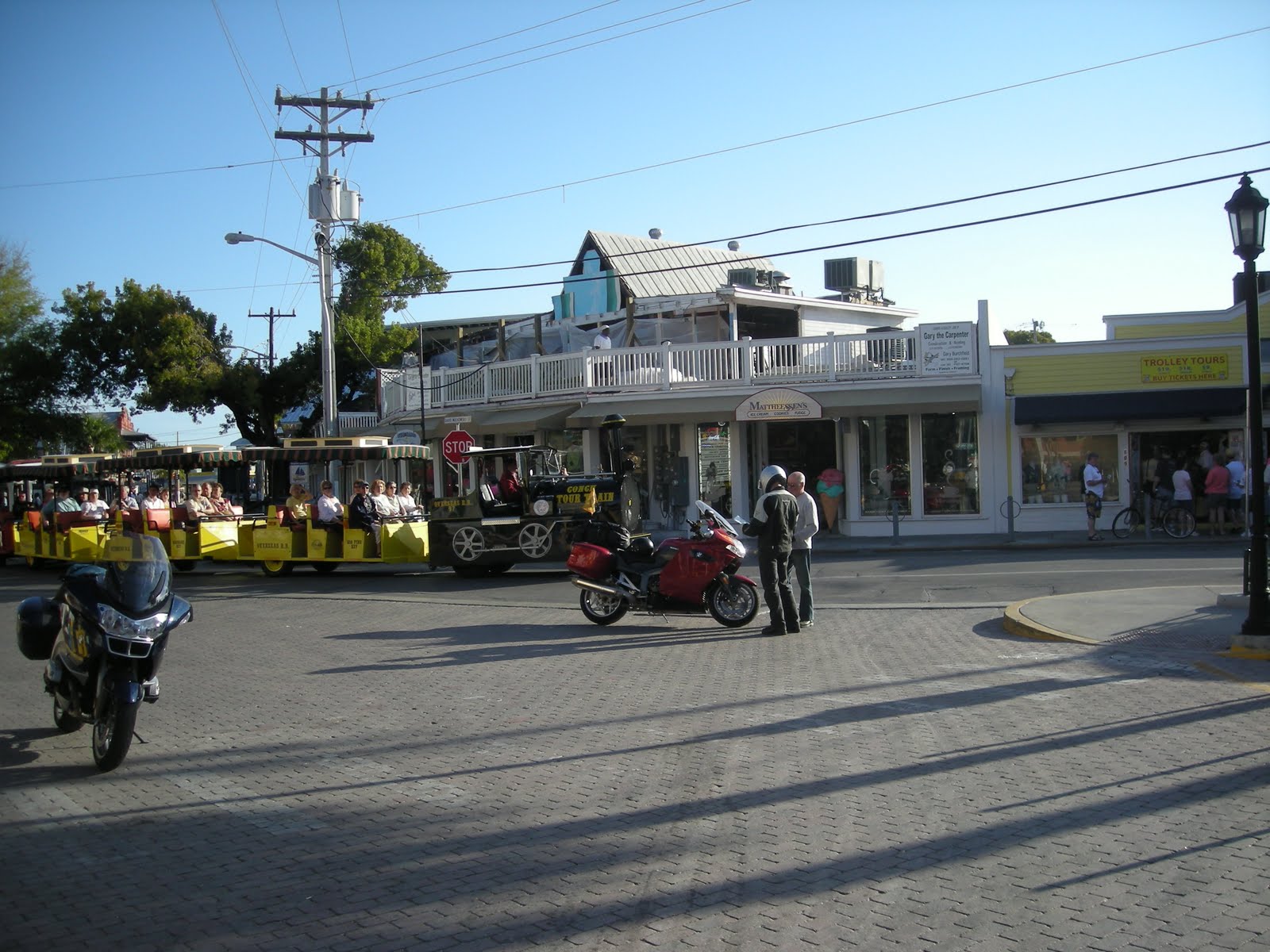
We visited the grounds of the Keys Art Museum, as well as Fort Zachary. We took a tour of downtown and the port.

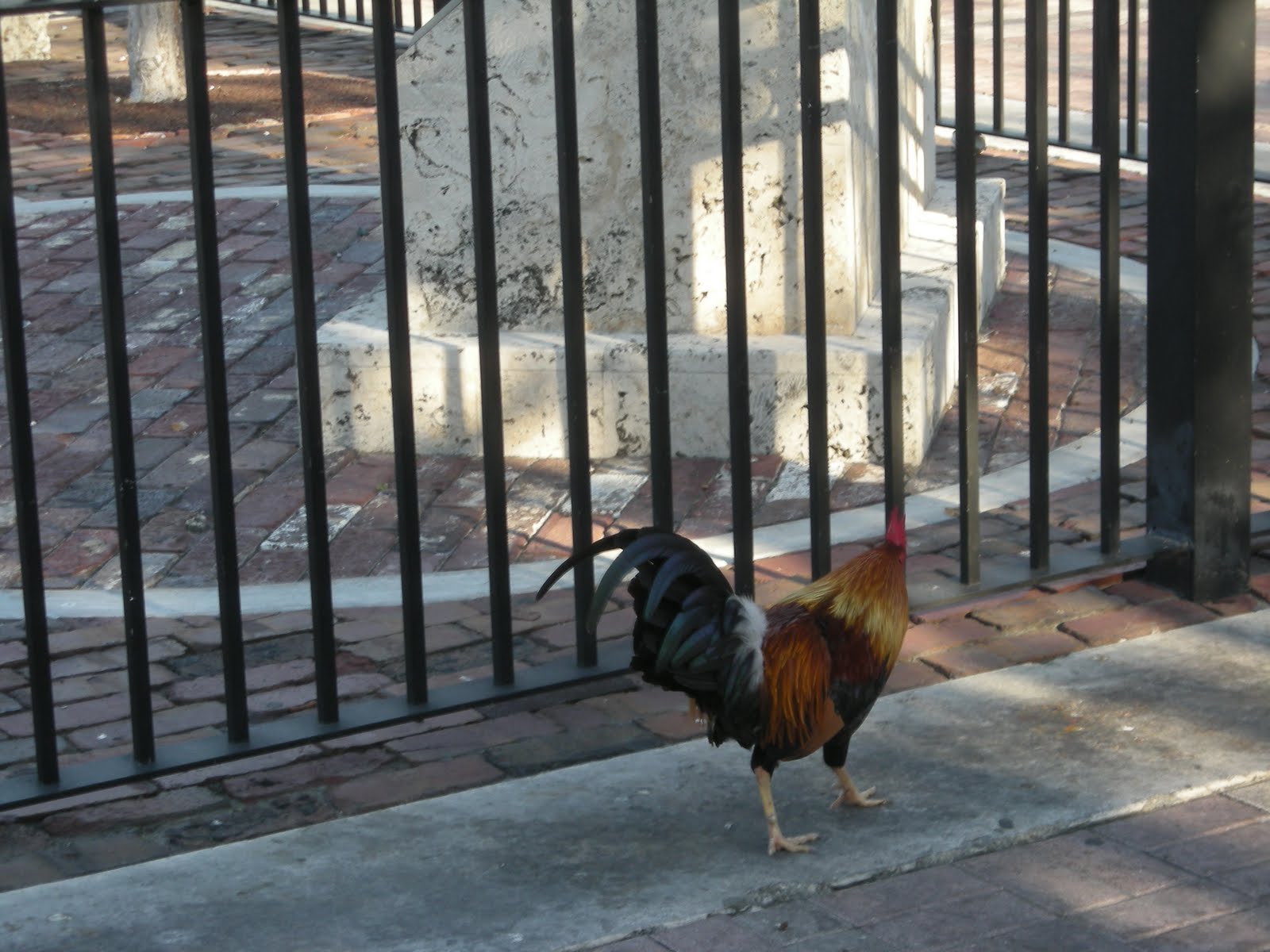
Key West is known for it's free roaming chickens and six toed cats from the Hemingway Museum. They are prevalent throughout the island.

Here are some pictures from our trip, as well as a bit of historical backgound of the area and their very unique environment.


The Origin of the Key West Gypsy Chicken
Though it is thought that these birds have been in Key West for over 175 years, their numbers certainly grew in the 1950s, when thousands of Cubans fled the Revolution and came to Key West to support a booming cigar industry. These Cubans brought their chickens with them. The birds were used for meat and eggs, but the roosters were especially prized for their beauty and prowess for cockfighting. Over time, many birds escaped their enclosures, or were "released" by owners no longer interested in maintaining chickens once eggs and poultry became readily available in local markets. With few predators on the island (except hawks and feral cats) the "wild" chickens thrived on a diet of native insects and lizards. Several generations later, these birds still roam freely throughout the island.


The Ernest Hemingway Home and Museum is home to approximately sixty cats. Normal cats have five front toes and four back toes. About half of the cats at the museum are polydactyl, which means they have extra toes. Most cats have extra toes on their front feet and sometimes on their back feet as well. Sometimes it looks as if they are wearing mittens because they appear to have a thumb on their paw.

Ernest Hemingway was given a six-toed cat by a ship's captain and some of the cats who live on the museum grounds are descendants of that original cat. Key West is a small island and it is possible that many of the cats on the island are related. Our cats are not a particular breed, but appear to be a combination of various breeds-sort of "Heinz 57" if you will. They are all shapes, sizes, colors and personalities.

During the shipping days, and before the days of pesticides, cats were kept to catch rats and mice. The weather is mild here and cats can live comfortably outdoors all year around; they are also quite prolific so they are numerous. There are local residents who feed many stray cats and there is a profusion of restaurants and guest houses where the cats can panhandle for hand-outs.


FORT ZACHARY TAYLOR
Construction of the fort began in 1845, shortly after Florida became a state. In 1850, the fort was named after U.S. President Zachary Taylor, who died in office earlier that year. Throughout the 1850s, construction on Fort Taylor was slow. Yellow fever, shortages of material and men, remoteness and hurricanes had slowed down progress.

When the Civil War broke out in 1861, Capt. John Brannon occupied the fort, placing it in Union hands. Key West was an important outpost for the Union because numerous blockade-running ships were detained at Key West harbor and guarded by Fort Taylor's cannons. The 10-inch Rodman and Columbiad cannons at the fort had a range of three miles. This was an impressive deterrent to the Confederate navy, preventing them from attempting to take the fort or the island of Key West. Proving to be a severe loss for the South, Fort Taylor remained in Union hands throughout the Civil War. By the time the three-story fort was finally finished in 1866 (21 years after it was begun), there were many impressive features included. Items such as sanitary facilities flushed by the tide and a desalination plant which produced drinking water from the sea were available as early as 1861. A total of 198 guns and a large supply of ammunition were on hand to secure the fort.


Saturday, March 13, 2010

Visit with Richard & Brenda

We took a couple of days to visit with Richard and Brenda, our friends from Recreationland. Their boat is docked in Cape Coral in a beautiful resort and marina.

Once again it was pretty cool, but we had a great time.